
Versions
- 2026-02-04 (2)
- 2026-02-04 (1)
Keywords
angiomyolipoma
tuberous sclerosis complex
Categories
How to Cite
Abstract
Wunderlich Syndrome is a rare potentially life-threatening phenomenon that involves spontaneous non-traumatic retroperitoneal hemorrhage. At present, identifying the course of conservative management in these patients, especially in pregnancy, has not been clinically established. Presented here is a known case of Tuberous Sclerosis Complex with a Bilateral, 10cm Angiomyolipoma in a 31-year-old female, initially managed with active surveillance. At 27 weeks of pregnancy, she presented with a sudden onset of left flank pain with a hematocrit of 22%. Anemia was corrected with blood transfusions. A contrast-enhanced MRI of the abdomen showed a large subcapsular perirenal hematoma of the left kidney. Renal angioembolization of the bleeding segmental renal artery was done. The patient was conservatized until 37 weeks of pregnancy and underwent cesarean section delivery.
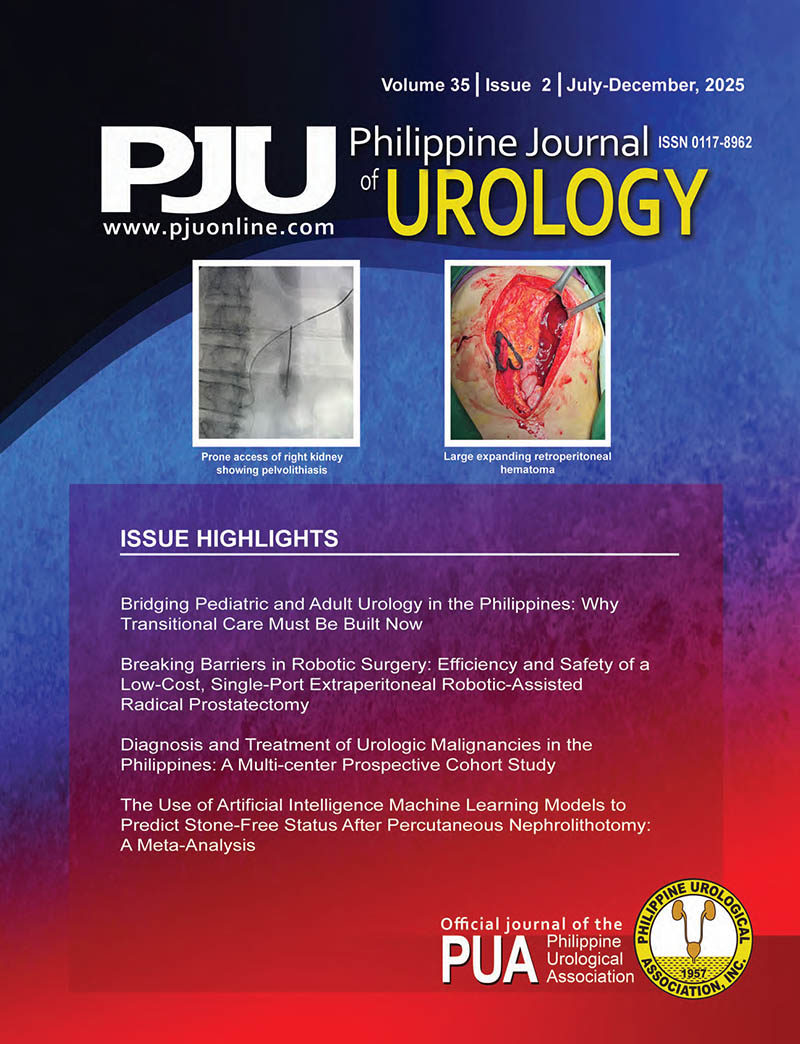
Four months after angioembolization, she had a recurrence of the left flank pain associated with gross hematuria and hypovolemic shock. The patient underwent emergency renal exploration of the left kidney via a transabdominal approach. Three liters of hemoperitoneum and a large expanding left retroperitoneal hematoma were noted intraoperatively. Early vascular control before nephrectomy of the left kidney was done. The postoperative course was unremarkable and the patient was discharged with improved condition.
This case displays a unique course in the management of a bleeding angiomyolipoma especially during pregnancy. Renal angioembolization can aid in achieving the age of viability in pregnancy. However, close monitoring for rebleeding should be kept in mind. A lower threshold for conservative management should be utilized when patients have a previous history of bleeding.

This work is licensed under a Creative Commons Attribution-NonCommercial-NoDerivatives 4.0 International License.
Copyright (c) 2026 Bren G. Oliva, MD, Enrique C. Tenazas, MD, FPUA